

School Information
About MH
Moreton Hall is a highly aspirational, joyous and nurturing school. Moreton
received the prestigious TES Boarding School of the Year 2021, with judges
saying that Moreton “was an exemplar of what a boarding school can
be.” Our close-knit family atmosphere allows us to truly understand each
pupil and guide them to reach their full potential. Located on 100 acres
of beautiful parkland in the beautiful Shropshire countryside, Moreton
accepts girls from 3 to 18 years and boys from 3 to 13.
Academic Excellence
Moreton Hall offers proven academic excellence with our exceptional
teaching staff at the heart of this success. Specialists in their field, our
teachers’ passion for their subjects is inspiring for our pupils. Moreton
offers an accelerated Oxbridge programme alongside a unique academic
enrichment programme that stretches pupils beyond the current exam
system. Every pupil is assigned to a tutor who meets with them at least
twice a week. Ninety-eight percent of our students attend the UK’s top
universities, with others entering top Art Schools and Music Academies.
Curriculum
Moreton offers 19 subjects at GCSE level, varying from traditional academic
subjects such as Latin, Further Maths and the sciences, to more practical
subjects such as business, drama and physical education. In addition to Latin,
languages offered include French,, Spanish and Mandarin. A-levels in history of
art, psychology, business and theatre extend the range of the curriculum. Spoken
English is a cornerstone of a Moreton education, developing confident and
articulate public speakers. All overseas students are offered EAL (English as an
Additional Language) and learning support at no extra cost.
Entry requirements
Moreton Prep welcomes girls and boys from age 3 to 11. Girls and boys are
admitted to Moreton Hall Senior School at the age of 11, with boys leaving
after Year 8 at the age of 13 to join their senior school of choice. Entrance
to the Senior school is either by Common Entrance or Moreton’s entrance
examination. Sixth Form entrance is by examination and interview. Around
20% of our students are from overseas.
Extracurricular
Moreton’s culture of continual innovation infuses our pupils with a willingness to
move out of their comfort zones and an eagerness to try something new, preparing
each of our graduates with a life of resilience, curiosity and leadership. Our
extensive co-curricular programme reflects this ethos of innovation and discovery
and is a critical part of what Moreton has to offer. From ecology to Model United
Nations and food and wine appreciation to journalism and dissection, Moreton
caters to a wide range of interests through our many societies and clubs. We
firmly believe that pupils should take advantage of the opportunities offered and
encourage everyone to ‘give it a go’ without fear of failure
Taking advantage of our natural environment, we also offer adventure activities
such as kayaking and canoeing on the canal bordering our grounds and rock
climbing and mountain biking in the Shropshire Hills and Snowdonia National Park.
The Duke of Edinburgh Award Scheme is always popular and offered at all levels.
Entrepreneurship has long been celebrated at Moreton Hall, as we nurture
and inspire the next generation of business leaders. At the centre of this effort
is Moreton Enterprises, a unique student-led business. Each year a new board of
directors from the Sixth Form is appointed to manage the business and make their
mark on a business that evolves with each new team.
Facilities
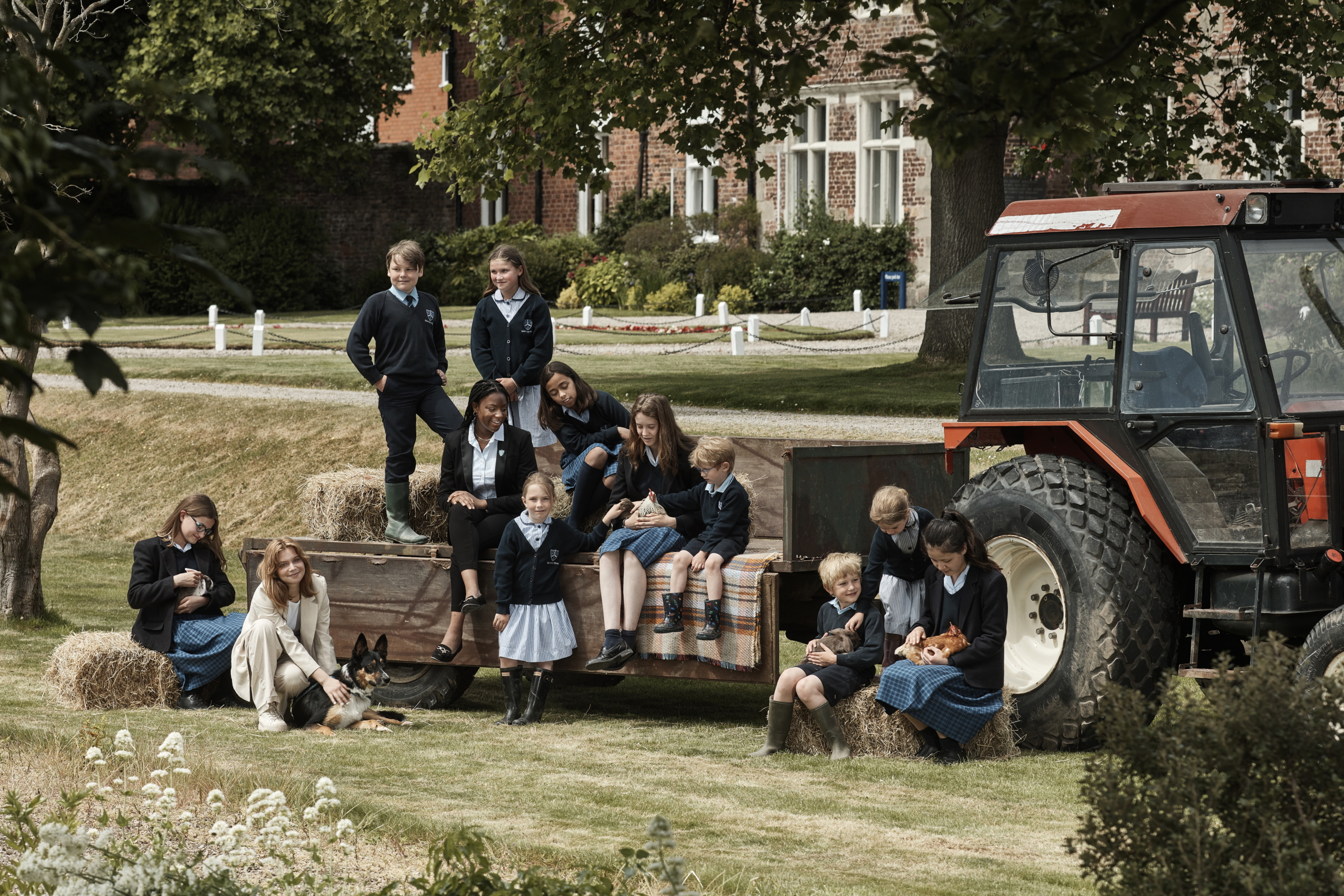
Set on 100 acres of parkland, surrounded by the beautiful Shropshire
countryside, Moreton Hall benefits from fantastic facilities including an indoor
heated pool, sports hall, floodlit tennis courts, pristine playing fields, a nine-hole
golf course and its very own farm. The school provides a wide range of sports,
with its core sports being lacrosse, netball, hockey, cricket, tennis and athletics.
Our amphitheatre and the Holroyd Community Theatre, a professional
performing space, offer performance venues for both music and drama.
Boarding Facilities
Boarding can start at the age of seven. Pupils are housed under the supervision
of resident housemistresses and masters, as well as resident tutors. As pupils
progress up the school, the dormitories are gradually replaced by double
and single en-suite study-bedrooms. The Sixth Form boarding houses offer
modern study rooms complete with private en-suite bathrooms.
Address
Open on Google Maps- Address Weston Rhyn
- Borough Oswestry
- Zip/Postal Code SY11 3EW
- Phone: +44 (0)1691 773671
- Fax: +44 (0)1691 778552
- Email: admin@moretonhall.com
- Website: www.moretonhall.org
News
Moreton Hall Pupils Celebrate Outstanding GCSE Results
Pupils at Moreton Hall have every reason to celebrate today as they continue the tradition of achieving outstanding GCSE results. Despite a narrative of grades being lowered to averages in 2019 in the return to pre-covid marking structures, our girls have outperformed national expectations yet again, achieving higher grades by every metric including 20% of
A Level Results 2023
Students at Moreton Hall are celebrating with a stellar year of A Level results which have confounded press predictions of a downward trend and with A* grades actually increased from last year and double those of 2019. For a cohort whose GCSE years were dominated by the covid pandemic and whose GCSE results were decided
Moreton Hall Student’s Midsummer Dream
The stage of the Globe Theatre, London beckons for Moreton Hall pupil and thespian Jessica Middleton after winning the regional final of the English Speaking Union’s Performing Shakespeare competition. Year 9 pupil, Jessica, captivated audiences and impressed judges at the prestigious ESU competition and has now secured herself a place in the national final at
Legally Brunette – Moreton Hall Alumni On Her Way to Being a Barrister
When Alura Bather joined Moreton Hall in Oswestry for her A Level programme, she was in no doubt that her dream job would see her end up in court – for the right reasons! Inspired, at least in part by Elle Woods, the heroine of her favourite film, ‘Legally Blonde’, Alura’s dream was to become
Moreton Hall GCSE Results
Following on from the success of A-Level Students earlier in the week, it is now the turn of Moreton Hall’s GCSE students to celebrate with a stellar set of results, cementing Moreton Hall’s reputation as one of the leading independent schools in the region. During the lockdown period, nearly all aspects of school life were
Moreton Hall A Level Results Day
Moreton Hall students are once again celebrating a stellar set of results which cements Moreton Hall’s reputation as one of the leading independent schools in the region. During the lockdown period, nearly all aspects of school life were transferred online with lessons, tutorials, pastoral care, wellbeing and activities continuing remotely. The school remained open for
Moreton Hall named Tes Boarding School of the Year 2021
Moreton Hall has been awarded Boarding School of the Year by the prestigious Tes Independent School Awards 2021. It proved to be an excellent day for the school, Mrs Sylvia Grace, former Head of Moreton Prep and current teacher and Housemistress, was awarded the Tes Lifetime Achievement Award for her significant contributions to education and
Mrs Sylvia Grace, Moreton Hall Educator, honoured with Tes Lifetime Achievement Award 2021
Moreton Hall is proud to announce that Mrs Sylvia Grace has been awarded the prestigious Tes Lifetime Achievement Award for her significant contributions to education and teaching excellence. The awards were announced in a virtual ceremony on Friday, which proved to be an exceptional day for Moreton Hall, as the school was also named Tes
Record-breaking year for Moreton Hall GCSE Students
Students and Staff at Moreton Hall are celebrating another record-breaking year at GCSE with over half of all entries achieving top grades 9 – 7/ A* – A. Amongst the many success stories, particular mention should be made of Liu Bohong who achieved ten GCSEs at grade 9 (equivalent to ten A*), Emma Vivian seven
Moreton Hall celebrate another exceptional year of academic success
Students at Moreton Hall are celebrating another exceptional year of academic success with over 70% of grades achieving A* to B. For Principal Jonathan Forster – who retires this year – these results are a testament to the commitment and determination of staff and students alike: “During my time at Moreton, we have scaled every
Iceland founder to speak at Moreton Hall’s Business Lunch
Entrepreneur and founder of Iceland Foods, Sir Malcolm Walker CBE will be the guest speaker at Moreton Hall’s Business Lunch next month. Sir Malcolm will address an audience of over 400 local and regional business leaders during the one day event, organised in association with Investec Wealth and Investment. The audience will gain an insight
Moreton Confirms its Reputation as one of the Country’s Leading Independent Schools
Despite national reports of turbulence surrounding A Levels and University places, Moreton Hall is delighted to report a vintage year of A Level Results confirming its reputation as one of the country’s leading independent schools. 53% of grades were awarded A* or A with a third of candidates achieving straight A* or A grades in
Moreton Hall Confirmed as The Number One ‘Non-Selective’ School in the UK at GCSE
Yesterday’s publication of The Sunday Times Parent Power League Tables has, once again, confirmed Moreton Hall’s position as the Number One ‘Non-Selective’ School in the UK! Jonathan Forster, Principal, commented ‘Our GCSE and A Level results – and our success nationally – are a testament to the dedication and commitment of our students and staff’.
Moreton Girls Storm to Regional Sporting Success
Eight Moreton Girls have beaten fierce competition and have secured a coveted place in the North Regional Lacrosse Team. The selection process was lengthy and difficult, with two separate trial dates and over fifty skilled sportswomen from Yorkshire, Lancashire, Cheshire and Shropshire competing for their shared goal. It was announced on Sunday 15th January that
Moreton Team Qualify for Rotary ‘Youth Speaks’ Regional Finals
The Moreton Hall intermediate team have qualified for the regional finals of the national ‘Rotary Youth’ Speaks competition. The team spoke eloquently and passionately on the topic of ‘Today’s Technology’, in turn impressing the judging panel and securing first place. All three girls put forward an interesting argument, illustrated their point clearly and concluded successfully in
Moreton Hall Ranked Number One in the UK
Moreton Hall in Shropshire has been named by The Times as the UK’s top performing non-selective school following outstanding A Level and GCSE results. This impressive accolade follows hot on the heels of The Tatler Schools Guide, which pronounced ‘If you’re looking for girl power, you’ll find it at Moreton Hall.’ Exceptional pastoral care, detailed
Vintage Year for Moreton Hall GCSE Results 2016
Despite widespread reports of grade deflation, this has been a vintage year for GCSE results at Moreton Hall, with an impressive haul of top grades across the board. Nearly half of all pupils achieved straight A* and As in every subject – a remarkable achievement for Britain’s leading non-selective school. Jonathan Forster, Principal of Moreton
Moreton Hall A-Level Results Exceed all Predictions
Despite continuing national uncertainty, the A Level results at Moreton Hall this year have exceeded all predictions with an impressive haul of top grades across all subject areas. Jonathan Forster, Principal of Moreton Hall commented: “As one of Britain’s leading non-selective schools we are delighted by these excellent results which are indicative of the quality
Moreton Hall Crowned Lacrosse Champions For the Fourth Consecutive Year!
Moreton Hall Crowned Scottish Schools’ Lacrosse Champions For the Fourth Consecutive Year! Despite freezing conditions the Moreton Hall team were crowned Scottish Schools’ Lacrosse Champions for the Fourth Consecutive Year this weekend. Moreton’s First Lacrosse team travelled to Scotland over the weekend to take part in the Scottish Schools’ Open Lacrosse Tournament to defend their
Moreton Lacrosse Team Wins North Schools’ Tournament
The Moreton Hall lacrosse teams had another successful day at the North Schools’ Lacrosse tournament at Queen Margaret’s York, with the 2nd team being crowned winners of their group. The 1st team beat Harrogate Ladies College (4-0), Bolton (2-1), and Withington (7-2) to be placed 2nd overall in their group in what was a close
Moreton Enterprises Launches Pop-Up Bookshop
Moreton Enterprises, Moreton Hall’s student run business, is delighted to announce the launch of their latest venture: a pop-up bookshop. Working in partnership with Oswestry’s Booka Books, recently named the UK’s Independent Bookshop of the Year 2015, the pop-up bookshop will feature the latest top titles in teenage and young adult fiction, as well as
Moreton Hall Hosts Sarah Parkes Spoken English Competition
Reading from The Book of Common Prayer, over 30 Moretonians took to the podium in the annual Sarah Parkes Competition. The competition, created by Dr Giles Parkes in memory of his late daughter Sarah, was once again judged by Colonel Frank Hewitt, chairman of the Lichfield Diocese Prayer Book Society and Sarah’s sister Celia Jenkins,
Moreton Hall Pupil Achieves Top IGCSE Geography Score
The Royal Geographical Society (RGS) recently announced the highest achieving UK IGCSE Geography candidate in the June 2015 session as Moreton Hall pupil, Selina Schoelles. Selina scored an impressive 97% across all three Geography papers, one of her 12 A*s at GCSE. She comments: “I was absolutely astonished when my Geography teacher, Mr Nanson, told me that I
Moreton’s U15 Cricketers Second in UK
Moreton came an impressive second in the UK, having qualified for the School Magazine U15 Girls’ National Cricket Finals Day on September 7th. In their semi final against Shenfield Comminity College, they won the toss and chose to bat. Head of Sport, Kate Simlett-Groves reports: “We had a very positive start however in the 3rd
Moreton Hall Twins Have Double the Cause for Celebration on GCSE Results Day
This has been a vintage year for GCSE results at Moreton Hall, Shropshire, with nearly 40% of pupils achieving straight As and A*s. 40% of the exams were passed with an A* grade and 71% at A* and A. In what is undoubtedly the school’s best set of GCSE results for five years, Computer Studies,
Moreton Hall Celebrates Another Strong Year of A Level Results
Whilst the national picture continues to be one of uncertainty, early indications show that it has been another strong year for A Level results at Moreton Hall. 67% of grades achieved were A*, A or B with a significant number of students achieving straight As and A*s in their subjects. Photo: L-R: Ishika Roy-Chowdhury will go
Moreton Hall recognised for excellence in music in annual awards
It was announced today that Moreton Hall, near Oswestry, has won a Good Schools Guide Award for Highest Performing English Independent School for Girls – Music Performance Group. Moreton Hall has been presented with this award by the Good Schools Guide for out-performing all other English schools in its category or displaying excellent performance. The prestigious annual awards which are in their 8th year, are
Moreton Hall Donates Uniforms For Kenya
As Moreton Hall’s prep school, Moreton First, introduces its new uniform in autumn, the children of the school have come up with a charitable initiative. Rather than wasting the uniforms, the children have asked Head Girl, Alice Smith if she would take their old t-shirts to Kenya with her to donate to a primary school
Moreton Hall Eco Team Qualify For National Finals
Moreton Hall Eco Team entered a team of Year 9 girls in the Go4Set competition run by the Engineering Development Trust this term. The judges were impressed with their model, awarding them the ‘2015 Prize for Real World Application’ by the British Science Association and Crest Awards. The project also won a place in the finals
Moreton’s Cricketers Make National Finals Day
Moreton’s impressive U15 Cricket team made it through to the U15 National Cricket finals day to be held on September 7th after beating Wakefeld Girls High School by 7 wickets on Thursday June 18th. The finals day will take place in Oxford and will consists of both the semi-finals and finals with teams from Shenfield High School, Brighton College and
Moreton Launches Third Annual Science Festival for the Community
The contribution that STEM subjects (science, technology, engineering and maths) can make to the British and world economy is widely recognised, not just in the political arena but also by industry; consequently there is a growing national recognition of the importance of recruiting more students and especially women into STEM careers. But how do we
Moreton Hall’s Maths Success
Moreton Hall student Phoebe Jackson, Year 11, has been invited to a UK Mathematics Trust Olympiad Initial Training Camp at Queen’s College, Oxford. The main purpose of this camp is to offer a week’s intensive training in mathematics outside the conventional syllabuses to a few of the most able young mathematicians in the country. It
Moreton Hall Pupil Jemima ‘Outstanding’ at Alderley Edge
After just five years of lessons, Moreton Hall student Jemima Pickersgill (15) is not only Grade 8 on the clarinet but also came an impressive 3rd in the prestigious Alderley Edge Festival of Music and Drama and was deemed ‘outstanding’ by the judges. Performing in the Recital Class, Jemima was competing against many students who
Moreton Hall’s Cricketers Compete at Lady Taverners Finals at Lords
With cricket said to be one of the fastest growing team sports for girls in the UK, Moreton Hall’s cricketers are at the forefront of this success story. This week saw the U15s Team come fifth in the finals of the Lady Taverners Girls School Indoor Cricket Competition held at Lords. “The girls have had
Moreton Speakers Win Seven Trophies
Young speakers came from throughout the region to compete at this year’s Cheshire Festival of Speech and Drama on Saturday 9th May. Moreton Hall pupils performed exceptionally, winning seven first place trophies, seven second place and six third places. “This is a very impressive result” commented Head of Spoken English, Merriel Halsall-Williams. First place awards
Moreton Hall Girls in Top 100 Mathematicians in UK
A disturbing OECD study published in March suggested that girls lack confidence in Maths and as a consequence significantly under-perform versus boys. Moreton Hall girls’ school swims strongly against that tide. This month Phoebe Jackson (15 ) and Georgina Lang (14) have capped an amazing year by both winning medals in the United Kingdom Mathematics Trust
Moreton Hall Midlands Cricket Champs!
Moreton Hall’s U15 Cricket Team today won the Lady Taverners Indoor Regional Cricket Finals at Fenton Manor, Stoke. They won all five games and now progress as Midlands Champions to the National Finals. Matches were played against Staffordshire, Warwickshire, Nottinghamshire, Worcestershire and Herefordshire. Evelyn Jones, England Cricket Academy player was coaching the girls and said: “The
Moreton Wins Top Awards at Rotary Regional Finals
Moreton Hall pupils Morgan Darcy Rees-Deacon and Georgina Lang (both Year 10) were awarded top accolades by Rotary International at the Youth Speaks Regional Finals last weekend. The girls were members of two Moreton teams which had qualified for the third round of the competition with Morgan Darcy voted the best ‘Vote of Thanks’
Moreton Cricketers Win Lady Taverners County Finals
Moreton Hall’s U15 Cricketers have qualified for the the Lady Taverners regional indoor cricket finals on April 24th after winning the county finals last week. They beat a strong Sir John Talbot side and Bridgnorth Endowed School in the group stage. Charlton School also reached the final after beating Church Stretton and Shrewsbury School. Moreton played extremely
Moreton Hall School’s Seventh Business Lunch a Resounding Success
Following on from the Editor of the Economist – last year’s speaker at Moreton Hall’s annual Business Lunch – was never going to be easy, but Digby Lord Jones pulled it off with impressive style. The Shropshire based school has the tradition of a strong business focus, with its unique Moreton Enterprises now celebrating
Moreton Hall’s Business Women Invited to Speak at Business for Children Awards 2015
The youngest speakers at this year’s Business for Children Awards held in Telford on Saturday March 14th were two young members of Mini-Moreton Enterprises, Lucy Rees (Year 6) and Bridget Bould (Year 5). Along with the senior girls of Moreton Enterprises who delivered an impressive business overview of operations in their £50,000 business, the younger
Moreton Flies High at Chester Festival of Performing Arts
The annual Chester Festival of Performing Arts offers students the opportunity to perform in a variety of classes from verse speaking, prose reading, solo drama, sight reading and spiritual readings. This year’s competition, held at King’s School, Chester on March 7th, saw Moreton pupils from Years 2 to 10 awarded an impressive total of eight
Moreton Hall Speakers Qualify For Rotary Youth Speaks Regional Finals
Two Moreton Hall teams have qualified for the Regional Finals of the national Rotary Youth Speaks competition to be held at the end of March. The Senior Team of Sophie Mercer, Mary Richardson and Morgan Darcy Rees-Deacon and the Intermediate Team of Emily King, Georgina Lang and Romy Grigg all impressed the judging panels at
Moreton Hall’s Excellent Speaking Board Exam Results
Distinctions Abound in English Speaking Board Exams As a critical part of their education, all Moreton Hall girls take part in the English Speaking Board programme to enhance confidence, presentation skills and the ability to think on their feet. ESB has just returned the outstanding results of this term’s examinations which included all of Years
Moreton Hall Lacrosse Players Star at Nationals
Shropshire starred at the Rathbones National Schools’ Lacrosse Championships of 2015 held at Surrey Sports Park on February 27th to March 3rd with two of Moreton Hall’s teams finishing in the top eight schools in the UK. “We are going from strength to strength with our lacrosse” comments Head of Sport, Kate Groves. “To
Moreton Hall’s World Book Day Challenge
World Book Day – March 5th… and beyond! ‘A book is a device to ignite the imagination’ writes Alan Bennett. Moreton Hall is helping to encourage the pupils of the school to ignite their imaginations via books in their new Reading Mountain Challenge. “The Reading Mountain Challenge’ is an incentive to put aside smartphones
Moreton Finish In Top 8 in the Country at National Lacrosse Championships
Fantastic news from the National Schools’ Lacrosse Championships where our 1st and 2nd teams have been putting in tremendous performances over the past two days. The 1st team has finished in the top 8 nationally, a fantastic performance! Photos from the tournament can be seen on the website (click here) and full scores from every
Moreton Hall launches STEM for All
“Getting young people interested in STEM [science, technology, engineering, maths] careers is a priority for government”, says David Willetts, Science Minister. It is also a priority for Shropshire based girls’ school, Moreton Hall. Through an advanced and unique programme, the school is leading the way in offering stretch and challenge experiences in STEM subjects to
Old Moretonian First Female Editor of Economist Magazine
After 172 years and 16 editors, The Economist Magazine this week appointed its first female editor, Shropshire girl, Zanny Minton Beddoes. Beddoes, a former pupil at Moreton Hall near Oswestry, joined The Economist in 1994 after studying at Oxford and Harvard and following a successful career as an economist with the International Monetary Fund. Never
Moreton Hall Speakers Qualify for District Finals of Rotary Youth Speaks Competition
The annual Rotary ‘Youth Speaks’ Competition held at Oswestry Library on November 25th saw three Moreton Hall teams compete with two qualifying for the District Finals in March 2015. “We are delighted by the success of both our Senior and Intermediate teams,” says head of Spoken English, Merriel Halsall-Williams. “The girls worked very hard for
Moreton Hall Student Gets Top Marks
Moreton Hall Student Chloe Achieves The Top A Level Grade in England and Wales Chloe Whittaker has been awarded the highest grade in England and Wales in Fine Art at A2 level by the examination board WJEC. There will be an award ceremony in Cardiff in December. Art teacher, Lizzie Langford comments: “Chloe’s sketchbooks were
Moreton Hall Pupils Run Half Marathon
Teenagers Making a Difference Too often teenagers receive bad press for summer holidays wasted infont of the TV, days spent texting, nights spent on the XBox. So it is refreshing to hear of youngsters who have focused their efforts on helping others, and have put in considerable personal effort to do so. Moreton
Moreton Hall GCSEs Outperform National Predictions
In contrast to the gloomy national predictions for lower grades at GCSE in 2014, we are delighted to announce that Moreton Hall is today celebrating one of its best set of results. Thirty per cent of the grades achieved are A*, and a record 98% of pupils have achieved five or more passes at A*-
Moreton Hall GCSEs Outperform National Predictions
In contrast to the national predictions for lower grades at GCSE in 2014, Moreton Hall is celebrating one of its best set of GCSE results. “We are absolutely delighted with the results we have received this year,” explains Principal, Jonathan Forster. “Despite gloomy predictions in the press, thirty percent of the grades achieved by our
Moreton Hall’s A Level Success!
Moreton Hall Maintains Outstanding A Level Grades Despite Downturn in National Results “Despite warnings from the Secretary of State for Education that this year’s A Level students would see a significant fall in grades, we are delighted to announce that our track record of excellent results has been maintained in 2014,” announces Moreton Hall
Moreton Hall Hosts Centenary Old Moretonian Reunion
Nearly 300 Old Moretonians, former staff, staff and Friends of Moreton returned to school on Saturday to celebrate the Moreton Centenary at the historic Grand Centenary Reunion. The day began with a moving Service of Celebration at St Oswald’s Church with the address given by Rev. Evelyn Davies MBE, former staff member 1970s-1990s. Moreton First
Moreton Hall Pupil Selected By Royal Academy
Local Artist Selected by Royal Academy Every year the Royal Academy presents an A Level online exhibition, to showcase some of the art produced by people of ages 16-18. Moreton Hall pupil and Head Girl, Josie Mason was invited to submit two of her pieces from her coursework project, entitled ‘Integration’. Josie comments: “There were
Moreton Hall Students Receive Excellent University Offers
Grace Receives Four Offers for Veterinary Medicine “Veterinary Science is a most intensely competitive subject… three rejections are not uncommon,” states the much acclaimed ‘Brian Heap University Guide’. It is therefore an impressive feat for Moreton Hall student, Grace Millar, to be have been offered places at all four of her chosen veterinary schools
Moreton Hall Launches Innovative Bio-Medical Summer Course
Aspiring medics, vets, dentists and keen biological science students are signing up for Moreton Hall’s innovative Bio-Medical Science training programme taking place at the school during August. The course has been specifically designed for strong scientists who will have just completed their AS Levels in Biology and Chemistry, and who are planning to apply for
Moreton Girls Take Second Place in National Finals
Four Moreton Hall students took part in the finals of the Thomas Cranmer Award held at St Matthew’s Church in Westminster earlier this month. Emma Tilley (Seniors) and Helen Norman (Juniors) were both placed second with Mary Richardson (Seniors) being Highly Commended. Participants are required to recite, by heart, a passage of their choice from the
Moreton Hall Takes Third Place in National Schools’ Lacrosse Championships
Having been crowned this year’s North Schools’ Champions and the Scottish Schools’ Tournament winners, the Moreton Hall U18A Lacrosse Team finished in a stunning 3rd place at the National Schools’ Lacrosse Championships in Guildford, Surrey this weekend, ahead of much larger rivals such as Downe House, Stowe, Putney High School, St Mary’s Calne, Charterhouse, Cheltenham
Moreton Hall Visited by Editor of the Economist, Ex-student!
Three hundred business guests from across Shropshire sat spellbound at last week’s annual Business Lunch at Moreton Hall near Oswestry. The speaker was former student of the school, Zanny Minton Beddoes, now the Economics Editor of the Economist Magazine, based in the USA. She spoke about the world economy, how it has evolved since the
Moreton Hall Alumni Zanny Minton Beddoes
Zanny Minton Beddoes – Economics Editor for The Economist Magazine – will return to her former school, Moreton Hall, to address an audience of over 300 business people at this year’s Centenary Business Lunch. The prestigious Moreton Business Lunch is an annual event which has become a firm fixture in the business diaries of local
Moreton Hall Students Achieve Top Marks in Speaking Exams
Over three days in February, eighty eight Moreton Hall girls from Year 7, 8 and 10 presented oral work for assessment by the English Speaking Board. There were some excellent results with over 50% achieving the top distinction mark and over 30% being rewarded with a Merit+. The course is part of their English curriculum
Moreton Hall Biomedical Science Training Programme – August 2014
An intensive academic course in biomedical science for A Level students of all nationalities seeking to apply to the UK’s top universities – including Oxbridge and Russell Group Universities – for medicine, dentistry, veterinary and related scientific disciplines. To find out more, visit the Moreton Hall website.
Moreton Hall Retains the Rathbones Scottish Open School’s Lacrosse Tournament Trophy
Moreton Hall returned victorious from their trip across the Scottish border to defend last year’s title at the Rathbones Scottish Open School’s Lacrosse Tournament. The team competed exceptionally well against squads from all over Scotland and England and were crowned champions after a tensely fought final match against St Albans High School. The team won
Moreton Fencer Becomes Midlands Regional Champion
Moreton Hall student, Olivia Owen-Sinclair (Year 13) has been crowned Midlands Regional Champion in the Closed Fencing Competition, in foil. Olivia, already the County Champion, won the Midlands Regional Finals with scores in her final matches of 15-3 and 15-11. Olivia will now go on to the Nationals in May where she will go up against other Regional Champions for
Moreton Hall Unique Medical Science Faculty
Inspired by the school’s vision of a unique Medical Science Faculty which would serve the schools in the local community, the Wolfson Foundation generously donated a substantial grant to Shropshire-based independent school Moreton Hall in 2013. This week the school took delivery of the first equipment to have been bought with the funding from the
Moreton Hall’s Review in the Good School’s Guide
“We felt that every girl in England should have at least a term in this environment” – The Good Schools Guide, 2014 We are very proud to be sending you the outstanding review published in this year’s Good Schools Guide. It is an honour to even appear in this independent guide, one which we never
Moreton Hall Student Crowned County Fencing Champion
A Year 13 Moreton Hall student, Olivia Owen-Sinclair, won the Shropshire Closed Fencing Competition, in foil, last weekend at Belvidere School. The win was especially hard fought as there were no age groups, meaning Oliver fenced both seniors and juniors to win her title of County Champion.
Moreton Hall Students Win SUBWAY® Competition
A Moreton Hall team of Year 13 business women, Siân Jones, Kate Pumphrey and Laura Mercer has won the finals of the SUBWAY® brand’s Design a Sub challenge held at The Pavilion in Birmingham on December 3rd. The team of Year 13 students presented a Dragons’ Den style pitch to a panel of SUBWAY® brand
Moreton Hall Visited by Leading Astrophysicist
One of the world’s most respected astrophysicists, Dame Jocelyn Bell Burnell, visited Moreton Hall on Friday, 29th November as part of the school’s Bronwen Centenary Lecture Series to discuss the universe and our place in it. Credited with the discovery of pulsars, one of the most significant astronomical finds of the twentieth century, Dame Jocelyn
Moreton Hall Students Gain TEFLs for Gap Year
Year 13 girls at Moreton Hall are presented with a certificate after completing a TEFL (Teaching English as a Foreign Language) training course in Moreton Hall’s International Study Centre (ISC). The course was designed to give the girls some practical and theoretical training in EFL teaching before they head off to teach abroad in their gap year.
Moreton Hall First Retail Listing for Enterprising School Girls
A business venture run by a local school has secured its first external sales outlet at Moreton Park Garden Centre, following an impressive pitch to the store’s gift buyer. The young business women from Moreton Hall school are all part of Moreton Enterprises, a set of business which have been running within the school for the past 25 years. As one
Moreton Hall’s Work Hosted by London Art Gallery
The Fine Art Society of New Bond Street generously played host to Shropshire based Moreton Hall this weekend, by offering a unique opportunity for the school to celebrate their centenary with a showcase of art from girls current and past. “This was a very rare opportunity for a school”, explains teacher and artist Lizzie Langford
Moreton Hall Exhibit at The Fine Art Society Gallery!
Exhibition Saturday 16th and Sunday 17th November 2013 What is it that might awaken the real passion of the aspiring fine artist, the emerging photographer, the budding ceramicist or film maker? Inspiring young artists to think big, be brave, be bold can be a challenge for today’s art teacher within the confines of the classroom
Moreton Shines At the Shropshire Festival of Verse and Prose
Two Moreton Hall girls qualified for the National Finals of the Thomas Cranmer Awards at this year’s annual Shropshire Festival of Verse and Prose, held at Moreton Hall on October 11th and 12th. Stephanie Christenson (aged 13) and Emma Tilley (aged 16) will go on to represent the Shropshire Festival at the prestigious National Finals
Moreton Hall’s Natalya Wins First Prize in National Essay Competition
Natalya Wins First Prize in National Essay Competition Natalya Kahn (Year 13, aged 17) has been awarded first prize in the Gladstone Ancient History essay prize of the National Schools Classics Magazine – Omnibus – for her essay entitled: ‘What can we learn about the society and culture of Roman Britain from archaeological and non-literary
Moreton Hall County Hockey Champions
The Moreton Hall U14 Hockey Team were crowned Champions at the County Hockey Tournament at Lilleshall National Sports Centre – the second Moreton Hockey team to be placed as County Champions this season following the First Team’s win last month. The team made it through to the semi-finals where they faced William Brooks. The game ended
Moreton Hockey Team County Champions
The Moreton Hockey team yesterday pulled off a convincing tournament win to become Under 18 County Champions and have earned a place in the Midlands Schools Zone Finals next month, the first time in the school’s 100 year history. Moreton came top of the 6 teams in the tournament after beating Ellesmere College 5-4 on
Moreton Hall Pupil Oliver’s Art to be Judged by Prince Charles
Seven year old Oliver, pupil at Moreton First school near Oswestry, has been selected as one of only 24 national finalists of the Royal Mail Christmas Stamp Design competition. Over 240,000 children entered the competition. Oliver was informed last night that he is one of two artists in the Midlands to have qualified for the finals, which will
Moreton Lacrosse Crowned Welsh Rally Champions
The Moreton lacrosse teams have continued the new season with stunning wins for both the first and second teams at the prestigious Welsh Rally. The first team had an outstanding day as the only participating team not to lose any matches throughout the tournament, securing their position as the Welsh Rally Champions for 2013. Jenny
Moreton Hall Bucks National Trend at GCSE
Mr Gove promised he would introduce more stringent marking at GCSE, making the elite A* grades harder to achieve, yet Moreton Hall is delighted to announce that it has bucked the national trend, achieving a stunning 30% of A* grades and 65% A*-A. “We could not be more pleased with these results in the light
Moreton Hall Excellent Ranking in The Times A Level Results Table
‘A’ Level results of individual schools are published in The Times today. Some schools have not submitted their results but they are available on their websites. We thought you might be interested to see how our results compare with those of other schools. The Times ‘A’ Level Results rank Moreton Hall as the top non-selective,
Moreton Hall Achieve Highest Ever Marks at A Level
We commence our Centenary year celebrations with news of the highest marks ever at A Level. Amid government moves to create more rigorous A Level standards, it was believed that this year’s top grades would inevitably drop. So we are absolutely delighted to be able to report that our A Levels have exceeded expectation with
Moreton Hall Former Student Gains First Class Degree From Oxford
Imogen Robinson, former student at Moreton Hall near Oswestry, has just graduated with a first class degree in Geography from St John's College, Oxford. Imogen, 22, from Sheriffhales, Shifnall will be starting a masters in Development Studies at the School of Oriental and African Studies (SOAS) in London in September with the aim of going
Robin Ince Opens Moreton Hall’s Annual Science Festival
Comedy collided with Science when the BBC's Robin Ince took to the stage as the opening speaker at Moreton Hall's annual Science Festival on Friday. As he leaped at rapid speed from Darwin playing the bassoon to worms, through the world's weirdest creatures to quantum physics and Hadron Colliders the audience sat spell bound by
Moreton First Prizewinning Artists
Two Moreton First pupils have achieved top prizes in the Millicent Kaye Memorial Art Competition. Kundai Chipondene (10) won first prize for Two-Dimensional art work and won £50 for herself and £100 for the school. Charlotte Brown (9) won second prize for Three Dimensional art work, winning £25 for herself and £50 for the school.
Moreton Hall Kinvara Wins Royal Windsor Horse Show Championship
Moreton First pupil, Kinvara Garner celebrated stunning success at this year's Royal Windsor Horse Show winning the Show Hunter Pony Championships (122cm) on her pony Woodview Cadenza. The win qualifies ten year old Kinvara for the Royal International Horseshow later in the year. Kinvara, whose home is in Worthenbury, Wrexham, also competed in the Novice
Moreton Achieves Moreton Hall Trophy Winners at Cheshire Festival of Speech and Drama
Moreton girls had a successful day at the Cheshire Festival of Speech and Drama on the 11th of May, winning eight 1st places and trophies. Twenty-six girls took part and all performed well, including those participating for the first time. Support from the girls and parents was excellent. Winners of trophies were: • Morgan Darcy
John Inverdale and Simon Halliday raise awareness of CRY at Moreton Hall
Legendary sporting commentator, John Inverdale and former England rugby player, Simon Halliday delighted a packed crowd of 180 guests at last night’s Sporting Dinner at Moreton Hall. Inverdale captivated and amused the audience with his astounding knowledge of many sports and with his anecdotes of life as one of the UK’s most successful sports broadcasters.
Moreton Hall Crowned U14 North Shropshire Netball Champions
On Tuesday 19 March the Moreton u14 Netball Team took part in the u14 North Shropshire Netball Tournament at Moreton Hall. The Team did exceptionally well by beating Corbet School, The Grove School and The Marches in the pool rounds to make it to the semi-final where they played Ellesmere College. It was a nail
Moreton Hall Shropshire Team make National Maths Finals
Moreton Hall finished first in the North West regional final of the UK Team Mathematics Trust (UKMT) Maths Challenge held at Birkenhead School on 6th March. The team members were (L-R), Georgina Lang (12), Rosie Smith-Langridge (14) Phoebe Jackson (13) and Antonia Nicholls (12). The four girls will now compete against teams from across the
Moreton Hall’s First London Marathon Runner
As if studying for A Levels and being Captain of the First Lacrosse team is not enough to have on your plate, Year 13 student -Rose Booth – has decided to join 35,000 others and take part in the London Marathon on 21st April. Rose believes she is the first girl from Moreton to ever
Moreton Hall – Shropshire Girls Triumph at Scottish Open Lacrosse Tournament
A Moreton Lacrosse team made up of U15 and U16 players headed to Scotland this weekend to compete in the 1st Team Lacrosse Tournament against schools from England and Scotland at Loretto School, Edinburgh. They played exceptionally well showing the talent and depth of Lacrosse played at Moreton, winning all their matches including the final
Moreton Hall Shropshire Lacrosse Club Launched
The English Lacrosse Association has launched Shropshire's first Community Lacrosse Club at Moreton Hall, near Oswestry. The Shropshire Lacrosse Club is aimed at all women and girls aged 13 or over who want to give lacrosse a go or get back into the sport. "Lacrosse is said to be the fastest game on two legs
Moreton Ranked as Top School In County for EBacc
League tables published today by the Department forEducation reveal that Moreton Hall’s GCSE candidates were Shropshire’s top performers in the English Baccalaureate (EBacc) in 2012, ranking the non-selective independent school above all of its highly selective counterparts such as Shrewsbury School, Shrewsbury High School and Concorde College. So what is the EBacc? The EBacc measures
Moreton Hall receive ‘excellent’ feedback from Inspectors report
‘Excellent’, ‘outstanding’ and ‘exemplary’ were just some of the epithets used by Inspectors in the recent Independent Schools’ Inspectorate report for Moreton Hall which was published this month. Principal of Moreton Hall, Jonathan Forster comments: “The entire report makes excellent reading and reflects the school’s success both inside and outside the classroom. We are particularly
Moreton Hall – Battling on through the snow!
While the winter weather seems to have once again brought our unsuspecting country to a standstill, giving thousands of happy children days off to build snowmen, Moreton Hall has battled on with no closures. Bad luck for the pupils? Well, maybe they will thank the Headmaster when exam time rolls around!
Moreton Hall Girls Selected for National Youth Choir of Great Britain!
An impressive five talented vocalists from Moreton Hall have been selected for the National Youth Choir of Great Britain. Auditions for this nationally acclaimed choir take place all over the country, with thousands of youngsters hoping to gain a place in a choir of only one hundred and twenty members. Georgia Webb (15), Loren Kell
Moreton Hall Geographer Scores Country’s Top A Level Mark
Every year the Royal Geographic Society recognises those students from schools across England, Northern Ireland and Wales who achieve the highest score in their Geography GCSEs and A Levels. Phoebe Griffith, who left Moreton Hall in July to take up her place at Brasenose College, Oxford, was recently awarded a cash prize and a certificate
Moreton Hall Aspiring Medic Has Paper Published
Aspiring Upper 6 medic, Millie Adams-Davies, has recently published her first paper. “Medlink invited me to submit a paper on a gedanken experiment (thought experiment) about stem cells. I decided to look into Osteoarthritis because last year I went to the RJAH Hospital research centre in Gobowen where they focus on research into osteoarthritis using
Moreton Hall: Lacrosse Champions of the North
Moreton Hall is officially the top school for Lacrosse in England’s North following an outstanding performance by all three teams at Saturday’s North Schools’ Lacrosse Tournament. Seven schools from the North of England battled it out at the tournament at Queen Margaret’s School, York. Moreton beat strong teams from Harrogate Ladies’ College, Queen Margaret’s –
Moreton Halls Perfect Puds!
The past few weeks have seen us traversing Shropshire, Cheshire and north Wales pitching to local farm shops and giving them the opportunity to stock the Moreton Hall ‘Perfect Pud’. This has proved extremely popular with the farm shops loving the unique story behind the puddings and how we – as a team – have
Moreton Hall Enterprising School Girls Take Prepare for Christmas
Moreton Enterprises, the unique £50,000 set of businesses at Moreton Hall school in Shropshire which are run by the girls for the girls, has launched its own, home-made luxury Christmas puddings into the retail market. Moreton Enterprises was set up in the school some 25 years ago when the students decided to campaign to re-open
Eight Moreton Hall Girls Selected for ‘North’ of England Lacrosse Squads
Eight outstanding Moreton Hall Lacrosse players have been selected for the Regional ‘North’ A and B squads. “England is split into just 3 regions for lacrosse with only 40 players are chosen from the whole of the North region (north of Birmingham) so places in the squads are fiercely contested”, comments Head of Sport, Kate
Moreton Hall pupils win Business and Professional Women’s Public Speaking Competition
Two Moreton Hall students walked away from the Business and Professional Women’s Public Speaking Competition this week with awards, confirming their outstanding abilities in the field. The competition saw 7 teams from schools in the area compete. “It was a competition of very high standard”, explains Head of Spoken English, Merriel Halsall-Williams. “We are delighted
Moreton Hall holds Inaugural French Verse Speaking Competition
Moreton Hall played host to over 100 children for its inaugural 'French Verse Speaking Competition' last Friday (November 9th). Children from schools in Shropshire and Cheshire of ages 9-13 recited French poetry at Moreton first competition of its kind. 'We are host to the Shropshire Festival of Verse and Prose each year and all of
Shropshire Festival of Verse and Prose
Two Moreton Hall girls qualified for the National Finals of the Thomas Cranmer Awards at this year’s annual Shropshire Festival of Verse and Prose, held at Moreton Hall school on October 12th and 13th. Katie Billing (aged 13) and Charlotte Ford (aged 14) will represent the Shropshire Festival and the Lichfield Diocese at the prestigious
Alistair Mcgowan launches centenary appeal at Moreton Hall
Friday night saw the launch of Moreton Halls' Centenary Appeal with a black tie dinner and dance and guest speaker Alistair McGowan, comedian and impersonator. "Alistair McGowan very kindly helped us to launch this appeal with a superbly witty and clever performance", explains Foundation Director, Katy Tanner. "He performed to a rapt audience of over
Moreton Hall Riding High
Moreton Hall's equestrians had many successes at the weekend, with teams and individuals qualifying for the forthcoming championships at the NSEA Inter Schools Qualifiers. Bridget Tate riding Donny came second in the Novice Dressage Class scoring 70% to qualify for the championships at Addington. Bridget is already the NSEA Country Dressage Champion for Shropshire. In
Moreton Hall Pupil to play in National Hockey Futures Cup
Tira Brown ( 15 ) of Moreton Hall is one of only 18 girls from the Midlands to be selected for the U16 Mercia Lynx hockey squad. The team will play in the prestigious English Hockey Futures Cup. “This is an outstanding achievement as it confirms Tira’s place as one of the strongest hockey players
Moreton First Coffee Morning Raises Over £300 for Macmillan Cancer Support
In a bid to raise awareness and funds for Macmillan Cancer Support, the mothers of Moreton First children near Oswestry baked a stunning selection of cakes and cookies, and managed to raise over £300. 'We are very lucky to have such a supportive community here at Moreton Hall and Moreton First', commented the Head of
Moreton Hall Winners at Welsh Lacrosse Rally
Moreton Hall kicked off the lacrosse season with the second team winning the Welsh Rally this Saturday at Haberdashers Monmouth. Head of sport, Kate Groves, comments: “They were outstanding, winning all of their games and at times playing at a standard on a par with many of the 1st teams.” The 1st Team won against
Moreton Hall School Bucks the National Trend at A Level
New government guidelines introduced this summer have threatened to disappoint this year’s A Level candidates. Yet Moreton Hall students have managed to outperform the national trend and the school’s own predictions with 92% of grades being at A*-C. ‘It has been no secret that the government’s new guide lines for A Level marking were going
Moreton School – Launch of ‘The Twelve Caesars’
The dastardly deeds of the Twelve Caesars, first described by Suetonius and now re-imagined and revived by Moreton's own phenomenon Matthew Dennison, were unveiled last week to a rapt audience. Matthew held the crowd in the palm of his hand as he read form his latest work and answered a range of demanding questions from
Moreton Hall launch Inaugural Science Festival with a Bang!
Friday saw the launch of Moreton Hall's inaugural Science Festival. After some impressive explosions with Mr Tom Corbett in the Chemistry labs, we all gathered to witness the skills of BBC's Steve Mould, a comedian, physicist and regular festival performer. Steve wowed the audience with his fascinating and exciting presentation on the chemistry of polymers.
Moreton Hall crowned north shropshire U15 tennis doubles champs
The Moreton Hall team of IMMY HILL, TIRA BROWN, ALICE SMITH & OLIVIA WADE SMITH were convincing winners of the North Shropshire U15 Tennis Doubles Competition for non LTA ranked players, played on June 20th. They beat teams from Ellesmere College, Corbet School, Thomas Adams and The Grove.
Moreton Hall – Four First Prizes at Cheshire Festival of Verse and Prose
Moreton Hall's public speakers once again came away triumphant from the annual Cheshire Festival of Verse and Prose held last Saturday, May 12th. Twenty Moreton girls were awarded 1st, 2nd and 3rd places in the various categories including verse speaking, duologues, Bible reading and prose reading. Lily Mainwaring (Year 7) came first in Verse Speaking
Moreton Hall – A Piece of Pi
On Monday 11th June Moreton's Pi Society held a Pi Recital competition (3.1415…). Many tried but it was down to the two finalist – Georgina Lang (Moreton First) and Flora Bai Xue (L6) to battle it out on the day. Most of us will only be familiar with the first 3 digits – 3.14 but
Moreton Hall – First Exceptional Spoken English Results
100% Pass Rate for Pupils, Fifty Percent Achieve Distinctions Moreton First continues with its Spoken English successes this week as 18 pupils presented their own choice of poem and a reading from a favourite book to a visiting English Speaking Board Examiner. Merriel Halsall-Williams, Head of Spoken English commented: ‘The pupils were thrilled to receive
Moreton Hall – Midlands Performance Hockey Squad
Outstanding success for Moreton hockey players as four Moreton girls have been selected this week for the Midlands Junior Performance Hockey U15/16 Squad after playing in the Midlands Hockey Tournaments earlier this month. Lauren Bradburne (U15), Tira Brown (U16), Kathryn Clarke (U16) and Olivia Wade-Smith (U16) will be involved in a number of training sessions
Moreton Hall – Shropshire Schools Athletics Combined Events Championships
Olivia Papaioannou competed in the Junior Girls Pentathlon (75m Hurdles, Shot, High Jump, Long Jump, 800m) of the Shropshire Schools Athletics Combined Events Championships and finished 2nd overall. This is an excellent achievement as she was competing against thirteen of the best athletes in the county. She is likely to be selected to represent Shropshire
Moreton Hall – County Call up for Lacrosse Players
Continuing a tradition of success in lacrosse at Moreton Hall, six of the fifteen team members recently picked for the Shropshire U13 Lacrosse Team are from the school. They include Camilla Smith, Lanxi Benady, Beth Clacher, Silvia Sancho, Lucy Reade and Katie Billing. Annie Nicholls, Grace Samuel and Lily Mainwaring have been chosen as reserves.
BBC Star Joins Moreton Hall
Emma Walker, semi-finalist of the BBC’s first Junior Apprentice series, has been appointed as Moreton Hall’s first Entrepreneur in Residence for a one year period. Moreton Hall school in Shropshire has a long history of inspiring young women to get hands-on business experience within the student-run Moreton Enterprises. Moreton Enterprises has been running at the
Moreton Hall’s first Lacrosse team returned from the country’s most prestigious schools’ tournament ranked in England’s top 10.
The National Schools’ Lacrosse Championships, held annually at Imperial College, London is the pinnacle of the schools’ lacrosse calendar, bringing together the very best qualifying teams in the country. On day 1 of the 2 day tournament (March 2 and 3) the Moreton Hall 1st Team won five of its six matches – against impressive
Moreton Girl Wins Junior National Final
Morgan-Darcy Rees-Deacon, aged 12, was awarded first prize in this year’s prestigious Junior National Finals of the Cranmer Awards last week in London. Reciting from the Book of Common Prayer, Morgan-Darcy presented ‘The Annunciation of The Blessed Virgin Mary.’ Head of Spoken English at Moreton Hall, Merriel Halsall-Williams, said: ‘Morgan’s presentation was absolutely outstanding. The
Moreton Hall student selected for U18B International Lacrosse squad
Moreton Hall student, Sarah Grace Spencer (15), has recently been selected for the U18B Home International Welsh Lacrosse squad. Sarah, from Hope in Flintshire, has played lacrosse for four years. She had to play her best during three selection weekends held over a period of two months. Around fifty girls took part with only twenty
Former Moreton Hall pupil picked for Children’s GB Ski Team.
Local boy, Ryan Brown (12), has just been told that he is one of four children in his age group to be picked for the Children’s GB Ski Team. Ryan, from Oswestry, who graduated from Moreton First recently, is now based in Champoluc, Italy. ‘ Ryan was at Moreton First and they generously gave him
Moreton Hall gets 10% to Oxbridge
The recent round of university offers for Year 13 students has seen 3 Moreton Hall girls receive offers from Oxford and Cambridge Universities. Phoebe Griffith, Kun Xu (May) and Gaby Harrison have received offers from their chosen Oxbridge colleges to read Biological Sciences, Mathematics and English respectively. ‘We are delighted that 10% of our university
Shropshire School wins EU Backing for Astronomy Project
‘Moreton was one of six European schools to each be awarded an EU grant of 25,000 Euros last year via the British Council,’ explains Head of Science, Richard Singleton. ‘The grant will allow the students to work on a two year collaboration based around the observation of asteroids.’ As part of this project eight members
Moreton Hall Girls School hosts swimming gala
On Wednesday November 23rd Moreton Hall hosted the North Shropshire Swimming Gala. Six North Shropshire teams competed from u13-U19’s: Moreton’s U15 Team were the overall winners for their age group Moreton’s U19 Team were the overall winners for their age group. Pictured are captains L-R Jessica Cooke and Robyn Minshall
Moreton Hall Girls crowned Midlands Lacrosse champions
Moreton’s U14 and U15 Lacrosse Teams both competed in the Midlands Schools Lacrosse Tournament at Stowe on Saturday 26 November. Moreton Hall, Wycombe Abbey. Malvern St James, St Helens & St Katherines, Stowe, Bedford High and Pipers Corner all battled it out in a round robin competition. The U15 Team were outstanding on the day
Moreton Hall Ranked Number 1 School Nationally For ‘Value Added’ for Second Year Running
For the second year running Moreton Hall has been ranked as the top independent school nationally for ‘Value Added’ on academic success. MidYIS (Middle Years Information System) was designed by Durham University and aims to go beyond the analysis of league tables. The system assesses pupils in Year 7 and predicts what each individual child’s
Moreton Hall beats UK’s top school lacrosse team
A big weekend for Moreton Hall on the lacrosse field beating both Godolphin School and Cheltenham Ladies’ College in all matches played. ‘These outstanding results further cement our position as one of the UK’s top lacrosse schools,’ explains Jenny Sanderson, Head of Lacrosse at Moreton. ‘Godolphin school has a strong reputation at Lacrosse as the
MORETON GIRLS RUNNERS UP IN BUSINESS COMPETITION
Moreton’s Budding Business Women In a tradition of producing outstanding young business women, Moreton’s Year 10 students excelled at this year’s ‘Entrepreneurs Live’ conference in Manchester on November 16th, being awarded second place for their business idea. Head of Business Studies, Catherine Ashworth explains: ‘Prior to the conference, the delegates were invited to take part
New Student Directors at Moreton Enterprises
Started over 25 years ago with the students setting up a business to keep Gobowen train station afloat, Moreton Enterprises at Moreton Hall school is now a flourishing set of business with a turnover last year of over £50,000. Not bad, considering it is all run by Year 12 students at the school, most of
Professional saxophonist, Ben Castle, son of the late Roy Castle, came to Moreton Hall this week
Professional saxophonist, Ben Castle, son of the late Roy Castle, came to Moreton Hall this week to work with some musicians from Moreton First up to A Level standard. ‘Ben is related to two Moreton First students, Phoebe and Henry Dickson, and he offered to come in to inspire some of our young musicians with
Georgie achieves Distinction at Grade 8
Sixteen year old Moreton student, Georgie Muir, was awarded a Distinction at Grade 8 on the oboe in this summer’s ABRSM exams and also plans to sit her Grade 8 piano this year. ‘Moreton has been really supportive with inspiring teachers, which has helped me get to Grade 8 – and enjoy it!’, says Georgie.
The Sarah Parkes Reading from the Book of Common Prayer Competition
The Sarah Parkes Competition was held at Moreton Hall on Friday October 7th. Created 5 years ago by Dr.Parkes – father of former Moreton Hall girls – who felt that such a competition should become part of the Moreton Hall programme of Spoken English, the event is now a significant feature in the calendar involving
Moreton wins county netball and North Shropshire cross country competition
Cross Country On Tuesday 11 October Moreton Hall cross country runners took part in the North Shropshire Cross Country Competition at The Grove School. Moreton had an outstanding afternoon with Ellie Russell winning the U12 age group, Kitty Peel winning the U14 age group and Emma Tilley winning the U16 age group. Moreton Hall won
Moreton Hall Head Prefect invited to read at Chester University
Head Prefect, Phoebe Griffith, was invited to read a lesson at Evensong at the Prayer Book Society’s conference at Chester University on Saturday September 17th. Phoebe was the national winner of the Cranmer Awards earlier in the year for her readings from the Book of Common Prayer. ‘It was an honour for us that Phoebe
Moreton Hall; Consider Single Sex Education
Consider Single Sex During your search for a suitable school for your son or daughter, do consider the region’s single sex schools, the majority of which are for girls. As Dr Helen Wright, president of the Girls’ Schools Association points out, there’s good reason for doing so. She says: “ Academically, single sex schools top
Moreton Hall Girls;Outstanding GCSEs results.
Outstanding GCSEs for Moreton Hall Girls Outstanding GCSE results ensure Moreton Hall stays amongst the UK’s top achieving schools. With 73% A-A* grades, 41% A* and over 1/3 of the girls achieving top grades in all of their GCSE subjects, 2011 is one of Moreton’s best years to date. ‘We were thrilled with our
Moreton Hall Hosts its First Wedding
Moreton Hall Hosts its First Wedding Moreton Hall School near Oswestry became the majestic setting for the wedding of Sarah Forster and Sam Martin on August 27th. The very first wedding ceremony to be held at the school since the civil marriage licence was granted earlier this year was a double celebration for Principal of
Moreton’s Equestrian Success at the NSEA Qualifiers
On one of the rainiest days in June, four teams of girls, their ponies and parents, assembled at Southview Arena to get thoroughly wet and to compete against some of the most competitive schools in the area. Despite the soggy ground 3 out of 4 of our teams got placed in 3 separate classes and
Moreton Hall Weddings
A new reason to be standing outside the Headmaster’s office is the licensing of marriages in Moreton Hall’s intimate yet impressive Queen Anne period front hall. As part of a drive to offer the school’s facilities to the public, a licence has been granted this month for Moreton Hall to conduct civil marriage ceremonies. ‘We
Moreton Girls selected to perform with the English Youth Ballet
Two pupils from Moreton Hall have recently been selected to perform alongside the English Youth Ballet. Both Rose Brown, 15, from Llangollen and Sarika Butler, 15, from Selattyn, are studying for their grade 6 ballet examinations. They successfully auditioned to perform in the full length production of the classic ballet, The Nutcracker. The production is
Kinvara Qualifies for Horse of the Year Show
Eight year old Kinvara Garner, pupil at Moreton First school near Oswestry, has qualified for the Horse of the Year Show for her skills and those of her pony Basford Playboy. Only 20 children qualify each year, so this is an enormous achievement for Kinvara, especially so early in the season. Kinvara and Basford Playboy
Moreton Hall Student wins English Speaking Scholarship the USA
Laura Davies of Newport, Shropshire, a Year 13 boarder at Moreton Hall school, is one of just a handful of English students to be awarded the prestigious English Speaking Union’s Scholarship for 2011/12. The result of an application and rigorous interview, the scholarship gives Laura 3 terms at the Tabor Academy in Massachusetts, USA. There
Moreton Win U14 Rydal Penhros Hockey Tournament
On Saturday 5th March the U14 Hockey Team played in the Rydal Penhros Hockey Tournament. They played some outstanding hockey to win 4-1 against Newcastle-Upon-Lyme School, 8-1 against Rydal Penhros, 1-0 against Manchester High School and 1-1 in the final game against Stonyhurst. The team were unbeaten on the day after 2 hours of consecutive
Moreton Girl Becomes National Winner of Cranmer Awards
From a highly polished field of sixteen outstanding contestants from across the UK, 17 year old Moreton Hall student, Phoebe Griffith, came away as the senior national champion. The Cranmer Awards Senior National Final, held at The Charterhouse in the City of London on March 3rd, is a competition of readings from the Book of
Moreton Hall girl becomes U11 Cross Country Champ for N Wales
Moreton student, Ellie Russell, won the Under 11 Girls' race at the North Wales Cross Country Championships held at the Rhug Estate, Corwen on the 29th January to become North Wales Champion. She was also part of the U11 team which competed at the Abberley Relays at Abberley Hall on Sunday February 6th in which
Valentine’s Day Massacre at Moreton Hall!
A dead body. Police. Forensics. It all took place on February 14th at Moreton Hall as the Science, English and ICT Departments collaborated on a day of learning with a difference. The St.Valentine’s Day Massacre started with a visit from PC Lewis-Badman who briefed all of the detectives in Years 7 and 8 at the
Miranda and ‘Mouse’ ranked 4th in UK Equestrian Championships
Moreton Hall student, Miranda Tate, aged 14 competed on behalf of the school at the NSEA (National Schools Equestrian Association) National Championships at Addington Manor Equestrian Centre, Bucks, on Sunday 16th January, 2011. She was placed overall 4th in the Elementary Class riding Hatton's Topper, or Mouse as he is known at home. Mouse is
More success for Moreton Hall pupil Polly Booth
To add to her Grade 8 on the piano (passed with distinction) and Grade 8 in singing (also passed with distinction), Moreton Hall Year 13 student, Polly Booth, was delighted to achieve a merit for clarinet Grade 8 this December. 'Polly has worked consistently hard at her music throughout her time at Moreton, and has
Moreton Hall Girls Accepted by National Youth Choir of Great Britain
Three Moreton Hall girls have successfully auditioned for the National Youth Choir of Great Britain. Pictured left to right: Sienna Holmes has been invited to join the Training Choir, Kitty Peel will sing in the Northern Girls' Choir and Eve Thomas-Davies will join the Girls' Countrywide Choir. Eve says: 'It's pretty exciting and will involve
Local Runners Qualify for National Finals
Moreton Hall school girls have this week qualified for the prestigious English Schools Cross Country National Finals, to be held at Alnwick Castle, Northumberland on Saturday 4th December. ‘Our runners have worked very hard and have made impressive progress recently,’ explains sports teacher Lulu Lewin. ‘They did tremendously well in the Regional Final which has
Clean Sweep For Moreton’s Lacrosse Teams
Moreton Hall once again had a clean sweep on the Lacrosse fields against The Cheltenham Ladies’ College on Saturday November 14th, winning all games in the Under 15s, Under 14 A and Under 14B teams. ‘This is another stunning result for the Moreton players,’ says Head of Lacrosse, Jenny Sanderson. ‘We regard Cheltenham Ladies’ College
Moreton Hall ranked number one by Durham University
Durham University's highly respected MidYIS (Middle Years Information System) data has ranked Moreton Hall School, north of Oswestry, number one out of over 300 independent schools surveyed in the UK. The system assesses students at entry into senior school (at Year 7 or 9) and predicts what each child will achieve at GCSE (Year 11).